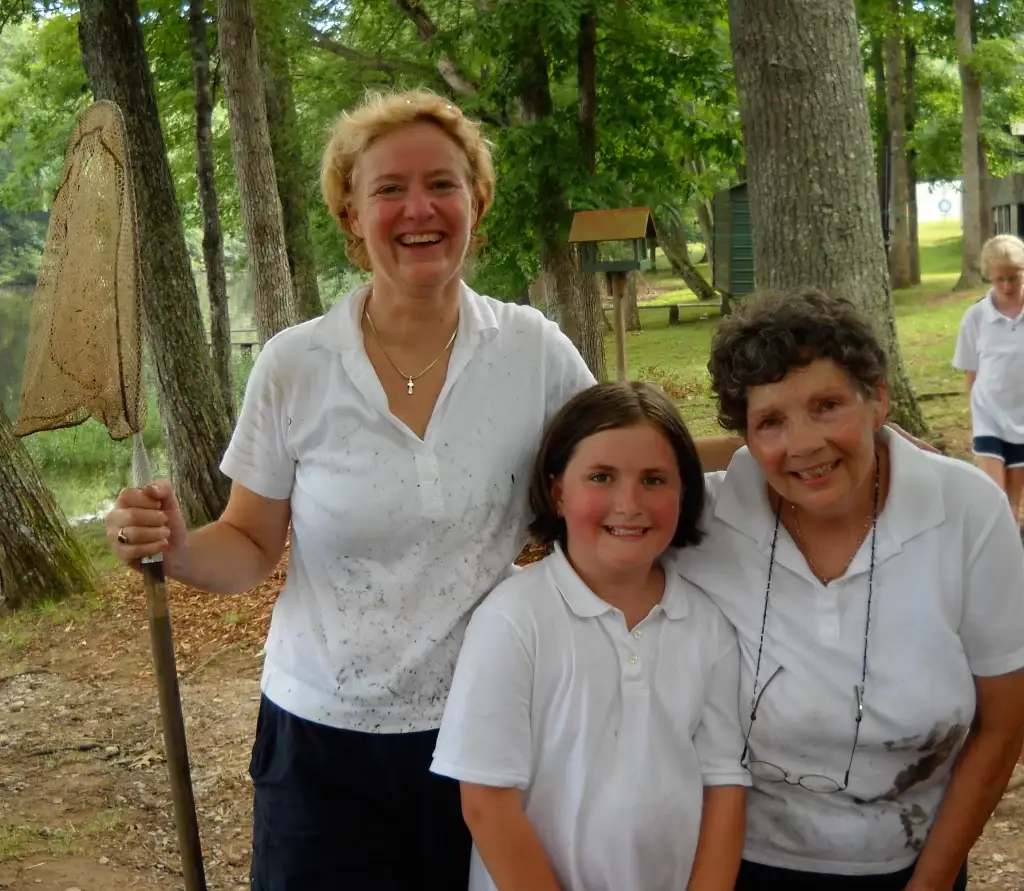
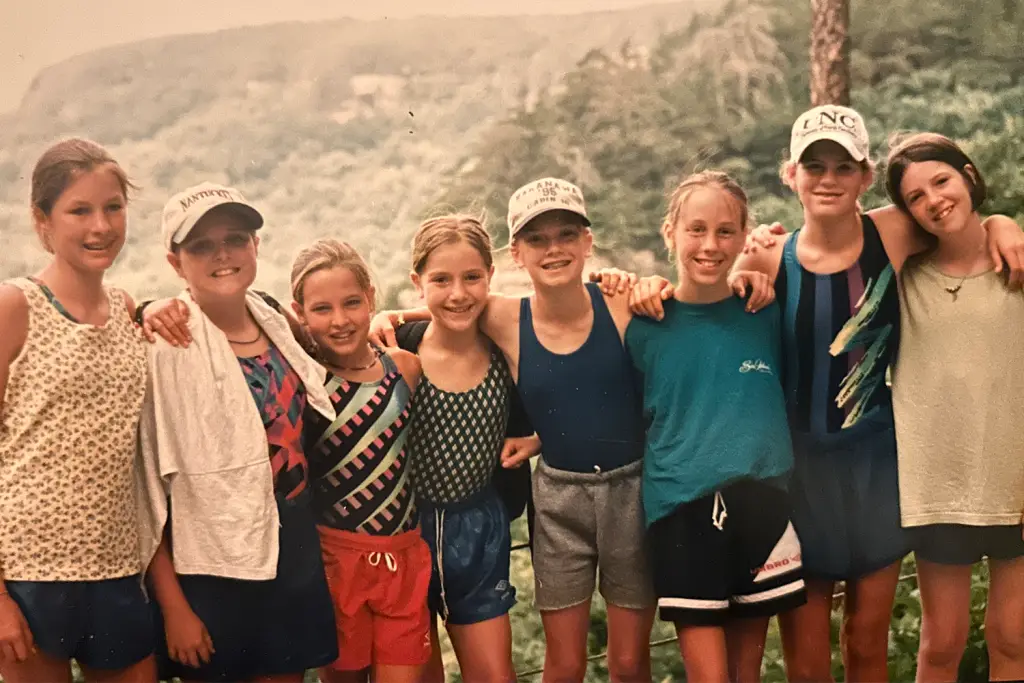
We girls are very lucky people (naturally!), and as Tent Row 2001 sisters of Murray Matens, we feel a particular kinship with her mother, the indefatigable Margaret Matens, who guided our timid beginnings as Junior campers, steered us resolutely across the lake, and later made all of our raucous reunions atop the Cumberland Plateau possible.
What wonder and self-confidence we discovered in the Nature Hut! Margaret’s calm demeanor quieted the nerves of every girl who first gasped at the sight of snakes, frogs, and spiders– easing her in, piquing her curiosity, and dispelling her fears. “She had a way of making you curious, brave and just a little less afraid of the things most of us would have preferred to admire from a safe distance,” remembers Hattie Schnacke Rounder.
Kim File Adkins recalls the summer Margaret came to camp with a rescued orphaned fawn who accompanied her everywhere, and we all eagerly took turns feeding her from baby bottles and lavishing her with hugs. “Margaret was a vision of a fairy tale with that deer in tow,” laughs Caroline Carter Marrs. “She was Snow White in hiking boots.”
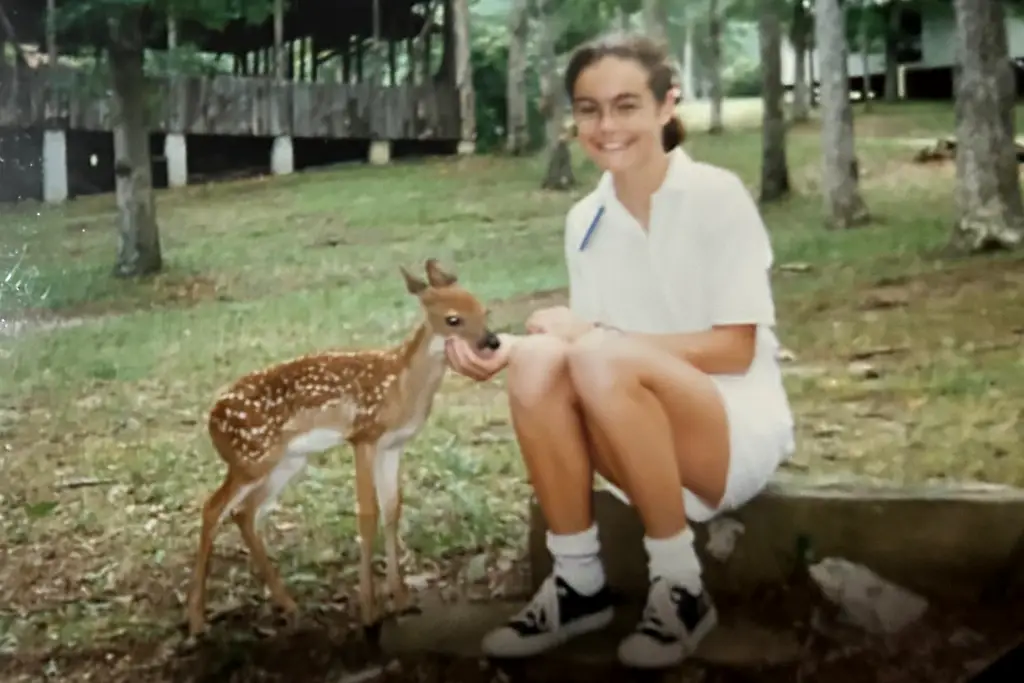
Under Margaret’s patient guidance, handling wildlife became as routine as flag raising or second blinks. “Of course we wanted to fawn over a fawn, pick up turtles or snuggle opossums,” Mary Leach Hall explains about her memories of nature class. “Margaret normalized hunting for Daddy Longlegs and tadpoles, and we couldn’t wait to get our hands and feet dirty.” This gift for helping children see the magic in nature–inviting them to “observe, touch, and be a part of it,” as Kim describes, remains an enduring part of our shared camperhood, even as encounters with the natural world have become harder to come by in our harried adult lives.
“I can’t tell you how many times I’ve gone to squash a bug or kill a snake but stopped short because I think of Margaret,” admits Wesie Cook Cashion. “Countless lives have been spared!” Laura Collins Gabbard adds, “I always felt like Margaret treated all the campers like her own daughters, wanting them to experience everything Nakanawa offered alongside the beauty of nature.”
Unquestionably, Margaret was a “walking encyclopedia of Nakanawa history,” and her spellbinding devotions and stories were collated across decades of camp lore, Council Ring legends and counselor hijinks. During our sixth-grade summer in 1996, she sought new ways to showcase us as leaders, even writing and choreographing an original song-and-dance that we performed, “They Call Us BR Women,” a nod to the back row of cabins we lived in as Junior’s eldest campers. “We felt like such a big deal singing our very own version of a Tent Row song!,” writes Laura.
A defining memory of that summer, for better or for worse, was a Free Day hike that Margaret led. Despite an unfortunate collision with a yellowjacket’s nest five minutes into the trail, which took out a few campers, Margaret insisted that the rest of us soldier on, imparting key survival skills to the group under a high noon Tennessee sun. Rapt with learning so many life lessons at once–such as how to spot poison ivy, listen for streams, collect birch bark for kindling, or orient yourself north according to rock moss–we inadvertently took a wrong turn and found ourselves collectively at large in the wild, wondering if we would need to forage for sassafras to make root beer or construct kindling teepees for a campfire while we awaited rescue.
For Margaret, this unplanned detour was yet another teachable moment: “Look for a clearing, girls! It will lead to a road!” In this case, the clearing gave way to an inexplicably vast dumping ground. Doubled over in laughter, we continued on our merry way, stopping for a dip in a pool or two, fully clothed, until we found the actual road home to Junior, where the dining hall took us in for a late meal. No doubt, we wrote a song about it too.
But for all the magic that Margaret sparked across Junior Camp and beyond, the most enchanting moments of all now belong to our daughters, who followed us to the storied spot we all hold dear—and straight to the Nature Hut porch where Margaret continued to hold court.
“My daughter, Lucy Belle, came home every summer full of stories about nature class,” Hattie gushes. “It’s hard to put into words what a gift that is.” Kim shares a similar sentiment. “Isla’s favorite event this past Mother-Daughter Weekend was holding Cornbread the snake,” she shares. More recently, Lucy Marrs, Caroline Carter’s oldest daughter and rising second-year-Intermediate, reflected on what she loved most about Junior Camp. “The Nature Hut was my favorite place,” she remembers fondly. “I loved helping injured animals and holding cool creatures.”
Caroline will soon have the privilege of sending all three of her daughters to Nakanawa. Like her father once did, she also spends a week each July serving as the resident camp doctor. She writes: “From Mother-Daughter Weekend to Junior nature classes, I have seen Margaret teach with the same energy, inspiration, and authority I remember from my own youth. She showed my girls how to feed baby birds with a paintbrush dipped in oatmeal. She invited me to sit on the Nature Hut porch rocking chair all afternoon, blanketed in sleeping baby possums. Margaret truly lived life to the fullest, gave generously of her gifts and passions, and made the world a better place.”
Alongside countless campers, counselors, alumnae, and families, Tent Row 2001 mourns Margaret and her absence from the trails and cabins we thought she’d occupy forever. “Margaret embodied everything about that sacred place,” lauds Wesie. “I hope that future generations of Nakanawa girls will continue to experience the simple beauty of the outdoors and discover a tenderness for all creatures great and small. May we all aspire to be more like her.”
Laura Rogers Wommack shares, “My last memory of Margaret is from this past summer, as she led the Camp Nakanawa Reunion evening along the waterfront of Senior. I picture her standing there in her blues and whites, just as I will always remember her, surrounded by the beauty of the outdoors, in a place she loved so deeply and to which she gave so much of herself.”
Now it’s our turn to become stewards of Margaret Matens’s outsized legacy and safeguard her service to nature, wild creativity, and, of course, Camp Nakanawa. As Laura Collins Gabbard aptly puts it, “Margaret was instrumental in creating and maintaining that feeling of always wanting to come back to Nakanawa, whether it was through her lessons to campers or all the work she put into TIES.”
Perhaps as we grieve, we find ourselves returning to that long-ago fear we once held for spiders and snakes. Anxious and uncertain, we were daunted by what was before us: an unchartered challenge we didn’t ask to meet. But with Margaret’s unflinching support and persistent encouragement, we learned a new way to be and to grow and to live. In this way, our grief can yield to gratitude for all she taught us and an abundance of promise for future seasons of natural wonder.
And now, “Does Tent Row 2001 have a song?”
“We sure do!”
In honor of Margaret Matens, we present a revised rendition of camp favorite, “What Red Sox Means on Baseball.” We can’t wait for our next reunion for the chance to perform it live!
What Margaret Means To Us
Why BR stands for Back Row
What TIES has kept in tact
How getting stung can’t cost our fun
So let’s all hike off-track!
Why spiders are for saving
How singing is a must
What Cornbread means to nature class
Dear Margaret means to US! Yes!