
Child Development

Child Development

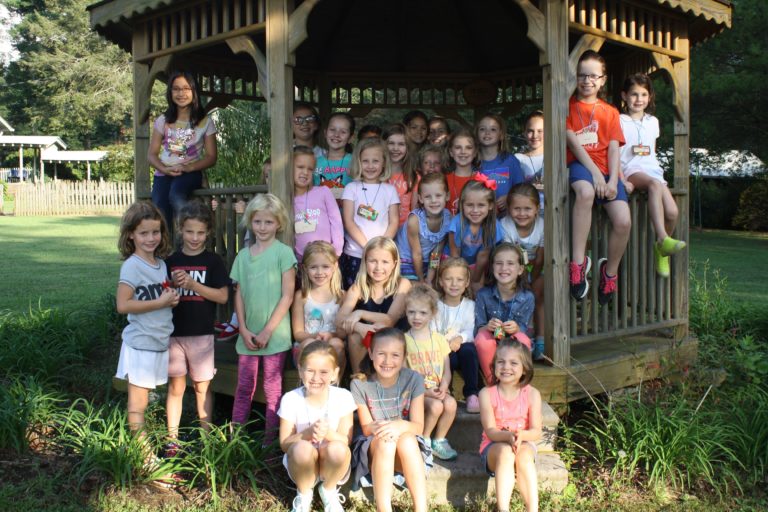
The most important “job” you will have as a Nakanawa counselor is that of cabin counselor.  You will be responsible for 8 to 10 girls, acting as big sister, friend, confident, and even “surrogate mom” at times.  At Nakanawa, we call the girls in our cabin our “bunkies.”  (They sleep in “bunk”…..get it?)  These girls look up to you, their counselor, in ways you may never know.

Lucky for us, we know what it feels like to be a young girl, a “tween,” and even a full-fledged teen.  We’ve been there ….. done that.  So you will probably feel comfortable in your newfound role as cabin counselor.

One of the comments we hear time and again from Nakanawa counselors is how camp can be a bit like a college child development course.  “Wow!  I can see adolescent development in action,” or “Now I understand what I just learned in my psychology class.”  And if you want to know the secret to being a great cabin counselor, here it is:  BE THERE!  Spend time in your cabin, take pride in your cabin, talk with each girl individually, take time to listen, and most important, be a great role model in all that you say and do.
 
If you would like to read the [impressive] article on  child development and summer camps,  click here to read the entire article.
 
Here are the ways that we can use their findings at Nakanawa:
 
  • Pay special attention to how campers make mistakes — both in activities and in relationships — because it reveals how they think. Knowing this will help you be a better counselor.
  • Provide opportunities for challenge and exploration. Most growth occurs when campers are faced with new, and even somewhat difficult circumstances. (Do you really think I can become an American Archer?)
  • Encourage effort without putting a premium on winning or perfection. Help campers understand that the process of learning involves more failing than succeeding. Remember to value the process, not the product. Nakanawa is a perfect environment to practice this.  Though we celebrate the accomplishments, we value sportsmanlike conduct over everything.
  • Be sensitive to younger camper’s concrete ways of thinking. It takes years to learn to think hypothetically and abstractly. This is one reason why younger children are impulsive and why they take what counselors say so literally.
  • Teach age-appropriate skills. Although it may be trendy to push kids ahead, Piaget cautioned, “Children have real understanding only of that which they invent themselves, and each time that we try to teach them something too quickly, we keep them from reinventing it themselves.”  At Nakanawa, we try to let young girls stay “young.”
  • Allow campers to be self-directed in some activities. Like many animals, children can be trained to perform. A nobler goal is to teach them to think for themselves and act responsibly. Some selfdirected play helps nurture children’s independence. And we have noticed that in today’s world, learning this selfdirected play is difficult for girls whose lives have been so orchestrated by their parents.
  • Pair challenge with support. Push campers’ skill limits while exposing them to expert instructors (that’s us!) and peers. This practice promotes proper child and adolescent development.
  • Design an environment where campers experience some mastery, not just constant challenge or constant hollow praise. A genuine sense of accomplishment, after some real effort and failure, is the only thing that increases self-esteem. There is no evidence to suggest that simply telling a child she is special will make her feel special.  At Nakanawa, our activities, reinforced by recognitions and clubs help support this genuine sense of accomplishment.
  • In terms of the activity you teach at Nakanawa, make sure you explain the goals of your activity to campers in advance. Then, at the end of some activities, discuss whether and how those goals were met. Play is your most powerful teaching tool.
  • And finally, Nakanawa is a unique utopia where each girl is celebrated for her own individuality.  Your support, care, and concern for each camper will help her grow and develop more than you will ever know.
 
If the child development experts were to design an ideal learning environment, it would need to be developmentally appropriate with challenging activities, nurturing experts, plenty of social interaction, and opportunities for both problem-solving and thoughtful reflection. Of course, it would also need to be just plain old fun.  I think I know just what that ideal place is, don’t you?

How to be a great Role Model

How to be a great Role Model

Children and teens do most of their learning by watching important people in their lives.  So says an article by Ethan Schafer, as printed in a recent issue of Camping Magazine. Believe it or not, you will become one of the lenses through which your bunkies view the world.

You will give campers a “mental map” for their lives in the ways that you

  • respond socially and emotionally
  • resolve conflicts, both big and small, and
  • communicate with those around you.

Ashley, the fun-loving counselor having fun on the giant swing!

Here are some ways to be great Nakanawa role models:

  1. Set a great example in all that you do and say.  Show up on time to flag raising, have positive words to say to all, stick to the camp uniform, and encourage your bunkies to do the same.  Notice when they are kind, appropriate, helpful, or fun.  Another good example of this is keeping your cabin area clean and tidy.  We require it of our campers, which means you need to show them that you believe in it, too.
  2. Have a positive, fun attitude.  Like Ashley up there hamming it up on the giant swing, we counselors have to some times show campers how to have fun.  We need to show a positive attitude and energy, even though we may not actually feel like it every time.  If we are having fun, the kids will have fun, too.  And then if we needed a lift, the contagion will go the other way and we’ll be having genuine fun ourselves.  Focus on what you do like, and catch them getting things right.
  3. Earn their respect.  Your bunkies have each other to be their friends, but you are the only one(s) who can be their counselor(s).  They count on you to challenge them to be their best selves, set appropriate limits, help them plan ahead, and keep order.  Have fun with them, but also remember that if you ever have to choose between earning their friendship and earning their respect, your best choice is to go for their respect.

Think about a person who has been an important role model in your life.  Think of the qualities that they have given to you.  let’s make it a point to become an important role model to a special camper this summer.  I can’t think of a better goal than that, can you?

Camp’s almost here!  Let’s get excited!

Counselors as Teachers

Counselors as Teachers

There is good information about how camps should set up their counselor staff so that it is a nice blend of college-age women, “working world” teacher counselors, and “older” former campers/counselors who help keep the camp traditions alive.  Without realizing that we were trying to have that perfect model….. we have it at Nakanawa!

Just looking at our counselor numbers, here’s how it plays out:

  • Many of our counselors are college-age (or just out of college).
  • More than 10 percent are teachers as their “real world” jobs.
  • Some are in med school, nursing school, or consultants, choosing to take a summer break to be at Nakanawa.
  • And many of our counselors are international.  We come from all parts ot he country and the world, to work together toward a common goal:  The campers.

For those of us in the “mature” category, we joke that we can’t stay away.  We keep coming back for more.  Though we are no longer acting as cabin counselors, we are supporting the cabin counselors in many ways.  We help to lead activities, do behind the scenes work like the dining hall and mail, help out in the cabins with devotions and rest hours.

Working together, with fellow counselors of all ages is one of the special parts of Nakanawa.  We look forward to having everyone together soon.  Camp will be here before you know.

Camp is about the Campers

Camp is about the Campers

What is Camp Nakanawa all about?  The campers, of course.
By Shelly Duer Landau

Hi, everyone….The first time you will learn about the girls in your cabin is the moment you and your co-counselor sit down with Ann and Pepe at the “cabin assignment” meeting during pre-camp.  I have had the privilidge to sit through these meetings when head counselor, and I have to admit, it’s magical.  It is in this meeting that you will learn about your bunkies, and you will learn what the parents hope and wish for their daughter.  You will even learn what their anxieties may be.  For instance, a mother may tell us that she is hopeful that her daughter tries new activities….. or shares that her child is a bit anxious about the lake…..or hopes that her daughter learns to be a good friend and get along well with others.  These may sound like small, insignificant thoughts and wishes, but they are not.  It will be up to you, their counselor, to take what you learn [on paper] and help your bunkie to expand their horizons while at camp.

Here are a few of my personal thoughts to help you keep your campers as your focus this summer:

  • Make something special out of camp’s unstructured times…..especially bedtimes.

Any time you are in the cabin with your girls is precious time.  Blocks of time like cabin clean up are times that you can interact and get to know them.  You are talking with them about the day, helping them to learn to work together, modeling good “clean-up” behavior yourself.  Before lunch or before dinner, when the girls are just talking together is another great moment.  Free days are another great span of time that you can bond with your cabin.  But the best time of the day is nighttime. The effort that you put in at night will pay great dividends in terms of the respect and the closeness they feel with you.  Establish a nighttime ritual that makes each girl ready to get to Egypt, get back to her cabin, dressed and ready for bed by second blinks.  Share a special devotion time every single night.  Make it count! It is through this special time that you will truly discover the magic of camp, and the camper counselor relationship.

  • Check in with every one of your campers, every day….making sure you ask the right questions.

Trust me, it can be easy to let time go by without spending one-on-one time with every camper, especially when they seem to be having fun and doing just fine.  But try to find that one-on-one time.  When not on duty during free swim, plan something fun with a bunkie.  Make a nightly ritual of asking each camper these great questions:  “What was the best part of your day?”  or “What was the most challenging part of your day and what did you learn from it?”  You will be amazed by the things you’ll learn. You will find that you are really getting to know each girl in your cabin, and that you enjoy this special time even more than they do.  The important thing is to do this every day, without fail, no excuses!

  • Catch your bunkies doing something right . . . instead of focusing on what is not going well.

This is actually a good tip for life.  When I was a camper, there was a counselor who took her free teaching period to walk around camp and observe her bunkies in their activities.  I remember thinking that she must really like the girls in her cabin!  And it was true.  She did!  Now, I’m not asking you to spend your free period wandering around camp, but perhaps network with the other counselors to check on your girls.  And if you are teaching a class, and you see a real accomplishment (or a child who overcomes a fear), share that with her cabin counselor.  It is in these easy ways that we catch our campers in a positive light, giving them feedback about their accomplishments along the way.

So I guess my best advise to you is, don’t let the CB (or Counselor Bunk) be where you spend your spare time, but rather let that time be spent with your bunkies whenever possible.  Think about the adults who have played the most positive roles in your life growing up.  Well, you are now in that role.  Have fun!

Hope these thoughts help.

Looking forward to seeing you soon,
Shelly

Maggie’s Thoughts on Devotions

Maggie's Thoughts on Devotions

•   What the heck is “devotions?”

Devotions are simply activities that you plan for your cabin each night to help them wind down before going to bed. They can be very deep and filled with a lot of meaning, or something fun yet quiet that can get your bunkies’ calm before getting in their bunks!

•   Why do we do devotions?

We do devotions so that each girl can talk about her day and be heard by their counselor and fellow bunkies. Each cabin has a different dynamic, and every camper has a different personality, so it is really easy for certain girls to be overlooked during their classes. If someone has a quiet voice and is easy-going, they might not get the chance to talk about their highs and lows of the day like someone who is outgoing and loud.

•   How do I get the kids to calm down so I can do devotions?

It really depends on the age group, because younger girls are going to be more tired after a long day of activities than older girls, but I always make every girl sit in a circle and we wait for everyone to get quiet. There is always one girl who will notice me waiting for everyone to get quiet while holding paper and markers, a beach ball, or whatever we need for the devotion that night. If they don’t quiet down, I usually tell them that we won’t have enough time before lights out if they don’t listen, and that will usually make them calm down.

•   Where do we gather together, how do we all be a part of it?

I like to have every girl sitting in a circle on the ground because that way you can see everyone and listen to everyone without skipping over anyone. They can bring pillows, blankets, whatever they want as long as it won’t be a distraction! If you go in a circle when having the girls answer, everyone gets a fair chance to speak, instead of the talkative ones taking over.

•   What’s a good routine to set up?

I always love to start with highs and lows. Whether the girls are 10 or 15, I think that everyone should think about their day and what they liked and didn’t like. My rule is that you don’t always have to have a low, but you always have to have a high, even if it’s a favorite meal or something little like that. Once everyone (including yourself) has had a turn, you explain the devotion and start! Also make the rule from the beginning of camp that Devotions will be starting at second “blinks” NO EXCEPTIONS. You have to start at second blinks every night so they know to get back from brushing their teeth or else they will miss out.

•   What are some problems you run into?

The biggest problem is probably getting your bunkies back to the cabin by second blinks because there isn’t a lot of time for them to get ready, but that’s when you have to be the facilitator. As a counselor you can always get ready for bed once lights are out, but it might be better to take a trip to Egypt as a cabin if it means that your girls will get their business done in a timely manner.

Another problem is getting them calmed down with enough time to actually do the devotion. There have been times when I might have to finish a devotion in two nights because the girls didn’t settle down with enough time before Taps came around. It’s a little bit disappointing to both you and your bunkies, but it teaches them that it’s important to make times for devotions and that it’s a special time that won’t be rushed.

Nighttime is bedtime, but it’s also time to get homesick. I had a bunkie who was so homesick every night that it was exhausting to try and get her into the circle, let alone get her to participate in the devotion for the night. That’s when you have to go into true counselor mode and advocate for the rest of your cabin. You have to give every bunkie equal attention, and even if someone is homesick you can’t give her a pass on devotions for a night because it will make devotions seem optional, which they are not.

•   What if I don’t have anything planned? Do I need to plan?

YES you need a plan! It doesn’t take a long time to plan a devotion, but if you have them planned out for each week early in the summer, it will save you a lot of stress over last minute planning and sloppy devotions. ALWAYS ask experienced counselors for ideas because we have a million of them! After a long evening entertainment when everyone is charging Egypt to brush their teeth is already stressful as a counselor, so don’t add to that stress by trying to plan a devotion at the same time.

• What are some good devotion ideas? For younger girls? For older girls?

A lot of devotions work for every age, like the “toilet paper” devotion. You have a roll of TP and have every girl take as many pieces as they want (usually with a maximum of 10). After everyone has the sheets of toilet paper, they have to say a fact about themselves for every sheet they have. You can also change what they have to say, like what they like about their cabin, what goals they have for camp (big or small), or whatever you think will be fun for them!

For younger girls, it’s harder to get them to think deeper because they haven’t had to think that deeply in their lives, so the more surface level devotions are easier and more enjoyable for them. Reading a book of poems will always intrigue and satisfy them while getting them ready for sleep. Older girls also love reading books or poems, but when your bunkies have had a long day, reading to them will make them feel at home.

One of my favorite devotions as an older camper was the “color” devotion. You get different colored pieces of construction paper (one color for each girl in your cabin) and you ask what POSTIVE personality traits go with each color. Every girl gets to answer for each color, and you write the traits on each color. After you’ve matched the traits with the colors, you then look at the traits and match them to each person in your cabin. Not only will this make each bunkie feel unique and appreciated, but you can also use this for bunkie gifts! One of my counselors made us each a clipboard with our color, traits, and name on it and it was an awesome and personalized gift! I did this last year with one cabin and made them a cardboard letter (their first initial) painted their color with all of the traits written on the back.

 There are SO MANY other devotions, so don’t be afraid to ask experienced counselors!
Also, group devotions and devotions with an older counselor are always fun for you and your bunkies!

When it comes to bonding with your cabin, just being in the cabin during downtime goes a long way. If you’re in on their inside jokes, it makes it a lot easier to develop friendships with them. Sometimes it might be easier to go to the CB and clear your head when you have an extra 20 minutes in the day, but your bunkies will definitely miss you if you spend all of your time there. Also it makes a difference to ask each girl individually about what she has been enjoying or not enjoying about camp and then follow up on it. Talk to the other counselors; ask them what they see in their classes, let them know if Susie Camper wants to do well in that class. Make time to talk to each girl as an individual so they can trust you as their counselor and friend.

Rest Hour Etiquette

Rest Hour Etiquette

Rest Hour Etiquette
By Catherine McPhillips
** How to manage your campers during the most important hour of the day. **

It’s true. Rest Hour will become your most indispensable asset at Nakanawa. During this hour, you can read, sleep, catch up on letters, prepare for your activities, and most importantly, recharge your energy and spirit for the rest of the day. Camp is a very communal experience, and Rest Hour is that one sacred time each day that is all your own. No one can expect you to work on anything, discuss or plan, or be anywhere except on your very own bed.

By the end of the first week, you will come to regard Rest Hour as one of the very best features of Camp Nakanawa! This time is just as important for your campers. Whether they believe it or not, they NEED this time to rest and regroup before their afternoon activities. Here are a few simple ways to make sure you and your bunkies enjoy maximum benefit from this hour:

On the first night, when you are laying out the ground rules and goals for the cabin, Rest Hour should be at the top of your list.

MY RECOMMENDED REST HOUR RULES:

  1. Rest Hour bell: Everyone has to be in the cabin before the bell. After lunch is not the time for hanging out in other cabins, at Egypt, etc. Stragglers will make it very hard for you and the other girls to start your rest hour properly.
  2. All girls MUST go to Egypt (the bath house) before the rest hour bell rings. Tell your bunkies to go straight from the Dining Hall to Egypt, and verify that they have in fact done that. (This is extremely important in Junior Camp, as those little bladders do not hold as much.)
  3. Stay on your bed: Even if the girls want to share markers or paper or headphones it is important to stay firm to this. Let them know that they can divide up supplies before the bell rings, or borrow something of your to tide them over. No bed sharing, no walking around the cabin.
  4. No talking: If you are not firm on this from the beginning, it will be very easy for Rest Hour to turn into “cabin hang-out.” We have PLENTY of time to bond as a cabin, but Rest Hour has a different purpose. So, keep the girls quiet from the start, and they will quickly respect and appreciate the environment you have created.

These seem like very simple rules, and they are. However, letting one girl sit on another’s bed, or one whispering conversation persist in a corner will soon turn your Rest Hour into an after-lunch circus. It is also unfair to the other cabins to disturb their Rest Hour. Be firm on these rules and reassure the girls’ time and again that this is for their health and well being, as well as yours!

We are Unplugged!

We are Unplugged!

Steve Baskin ACA video Link:
http://www.youtube.com/watch?feature=player_embedded&v=4rI3olRHxP4

Hi, Counselors!

This is a very important topic that will impact campers AND counselors:  Going Unplugged!  Camp Nakanawa is one of the few (and proud) camps that provide an unplugged environment for all campers.  The feedback from parents has been so supportive and thankful.  Parents want their daughters to have a natural camping experience, free from texting, phones and the internet.  So we plan to offer that pristine, unplugged environment. Please read this training module carefully, as it also impacts the way you as a counselor interact with technology.

  1. From the camper’s perspective:  This might be a tough “withdrawal” process for your campers.  So just be sensitive to that.  Because of all of the time spent in texting, Facebooking, surfing, kids are loosing many of the communication and collaboration skills.  That’s where we come in:  We help them re-focus and re-learn how to communicate with each other and work together in a collaborative way.
  2. What are the rules for campers?  Pretty straight-forward.  A camper may not have any type of gizmo (phone, laptop, iPad, iPod, etc., etc.) that can access the internet.  Even those that can be turned off:  Not allowed.  Cabin counselors will collect these on the opening day of camp and return them to their campers on the last day of camp.
  3. Technology rules for counselors.  This is pretty straightforward, too.  You have the same rules as the campers while in the general camp and cabin area. You may not use any gizmo (phone, laptop, iPad, IPod) in your cabin area or any area for that matter, other than the CB (your counselor bunk).  You may keep your “gizmos” in there.  You may use them during your time off or after your campers are asleep in bed. And you may only use them in the CB.  (There are a few exceptions that we will explain during our orientation together.)
    But back to counselor technology….I would use your time at camp to be a time that you, too, take a break from the crazy world of texting, Facebook, YouTube, Skyping, surfing the web, etc.  You will have access to the Camp Nakanawa wifi, but you will find it has less and less of a draw as the camp days go by.  Try to take as much of a break as you can.  Go out on the lake with a counselor friend after your campers are in bed (instead of sitting alone on your computer inside).  You won’t believe the stars!  Enjoy your time talking with your new-found counselor friends.  You won’t regret it.
  4. Counselors’ Social Networking Policy.  Nakanawa’s policy follows the policies of most schools.  Here goes:
      1. Online presence:  As a camp employee, it is your responsibility to deliver our Nakanawa mission. This includes all dealings both inside and outside the workplace; both on and off duty.
      2. Content: You are responsible for the content of all text, audio, or images that are placed or sent over the Internet.  Do not use the name Nakanawa anywhere at any time.  (Use the word “camp” instead.) Use of abusive, profane, harassing or obscene messages will put you at risk for termination of your job. Do not share the names of any campers.  It is our duty to protect them and their identity.
      3. Profiles:  Make all profiles private, please.
      4. “Friending” people: If a camper is under the age of 18 and is not a staff member, Nakanawa prohibits employees from “friending,” “following,” “liking” or have a private association with them.  If you are already a friend of a camper (because you were once a camper, too), please set them as a “limited profile.”  Remember, your Head Counselors and Ann are on Facebook….and see all! Also remember, your employers (including Nakanawa) use Facebook as a screening tool.

An interesting article all about TECHNOLOGY FASTING!  Hmmm….Maybe I’ll try some this summer!
Please pay close attention to these rules.  Our wish for you is that you have a wonderfully unplugged summer (as much as possible).

Extras that you may want to Bring

Extras that you may want to Bring

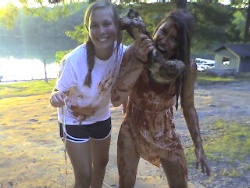
One of the comments we hear from brand new counselors is that they wish they had brought some additional items (that are not on the official camp list.)  Luckily, Martha (pictured at left) remembered her handy dandy wild woman bone.  lol!  Just kidding.  (Have we really scared off all of the new counselors now?!)  Martha had the “honor” of being the Wild Woman for the circus.  Who knows what you might have the honor of doing this summer?

So, just to help you know some of the “extra” stuff that we might bring, here’s the start of a list:

Extras that you might want to bring to camp:

  1. Construction paper for note cards (to write notes to your bunkies) – one of those multi-color “pads” is perfect.
  2. Markers (for the construction paper notes), and/or paint pens (which can be used to decorate anything from a plastic cup to a flip flop.)
  3. A book for yourself, and one to read to your cabin at devotion time.
  4. Ipod speakers (battery-operated) so you can all listen to music as you clean up.
  5. Crazy hats
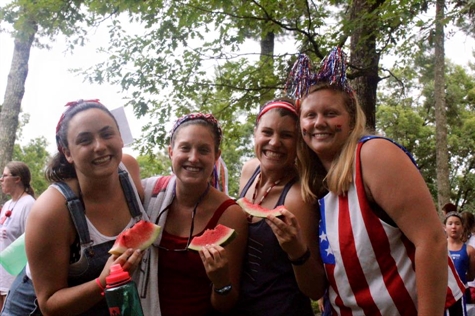
  6. 4th of July colors (shirt, hat, etc.), if you are here during 4-week.
  7. A crazy costume if you have one….never know when you might need it!
  8. Musical instrument if you play, to sing your bunkies to sleep (no pipe organs, please).
  9. Extra non-uniform clothes for running, free day, days off, “after TAPS” (see your counselor notebook), and pre-camp.
  10. A pair of sneakers or water shoes that you don’t mind getting totally soaked.
  11. A small spiral notebook that you can record info about your campers. This is used in writing letters home to the parents (called “Mama Letters.”)
  12. A sweatshirt, as it can get chilly at night, and last but not least,
  13. A great sense of humor and fun-loving spirit!

But please know that you don’t HAVE to bring any of these extras, and there will be plenty of all of these around camp.

Start your packing…..Camp will be here before you know it!

What to expect as a New Counselor

What to expect as a New Counselor

Hello There!

Congratulations! You might not know it yet, but you have just changed your life in a great way by becoming a Nakanawa counselor. I should know, because I did the same thing four summers ago. I’d never heard of Nakanawa before, never known anyone who went there, and certainly had no idea how to pronounce it. (I called it ‘Nak awa nana’.)

At first, I was nervous that I would not fit in with the women and girls that have been coming to Nakanawa for generations. I had never worked a summer camp before and had no idea what to expect out of a camp that called their bathhouse ‘Egypt’ and woke us up with a bell. The first time I sensed that Nakanawa might be a wonderful place was when I received a reply from Ann Perron, the owner/director of camp, about an email I had sent a few hours earlier. The email I had sent had a long list of too many questions about things that I felt like I needed to know for camp. I was amazed that she replied so quickly and answered all my questions in detail. She even encouraged me to email or call her if I had more questions. I was impressed with the personal interest she took in helping me feel comfortable coming to a new place for the summer.

The most frightening minutes of my summer were those last few of the drive to camp. What would it be like? Would I make friends? What have I committed myself to for the next 6 weeks? However, as soon as I drove into camp there were people already greeting me and waving hello. As soon as I wandered up to the office porch to get my cabin assignment, a few fellow counselors offered to help me move in. These were women I had never met and yet they were so friendly. After moving in, it was time for lifeguard training. Being from the city, I did not have experience swimming in a lake. When I was told to jump in the lake and start swimming, I froze. The other counselors encouraged me and I took the leap into Lake Aloaloa. From then on, I knew the summer would be great!

Make no mistake, Nakanawa is centered upon the girls, and by that I mean every female from 6-80 on that campus. You’ll find quickly that being at Nakanawa teaches you personally far more than you will ever teach a child about tennis or canoeing. There are so many women that keep coming back to camp summer after summer because they love the place so much, and are eager to teach everyone the things that they have learned. You won’t be alone, I promise.

The one thing I wish that someone would have told me while I was getting ready to come to camp is this: be ready for some intense traditions. The first day in the dining hall is going to be a mind boggling experience, “You expect me to eat my bacon with a fork? Fourth the bread? What does that even mean?” You’re not going to get it all immediately, but it will become second nature soon. Just go with the flow, mouth the words to the songs, and slowly you will understand that these things that seem so foreign at first are part of what makes Nakanawa such a special place.

Surprisingly, it all gets so much easier when the bunkies come. You think you’ll never get through the first day, but then suddenly when all of the cars are gone, when what was previously a clean, empty cabin is now a dusty disaster zone and all the girls are in bed you realize: I can totally do this. Because after that, it’s the easiest job in the world. Sure you’ll work hard and be exhausted, but you will soon understand that it doesn’t matter if you teach them all how to shoot a bullseye from 100 feet. Your job, quite simply, is to love the girls. You love them, you accept them for who they are, you rejoice in their triumphs, and console them in their failures. That’s what being a camp counselor is all about, and why it’s different from being just a teacher. If you’re prepared to do these things, to work hard and to love, everything is going to be just fine. You are not alone. Everyone is working together for the benefit of these little girls, to teach them and help them become the best women they can be. If, in the process, we learn how to be our best self, then the magic of Nakanawa has worked.

I hope you now understand what I said in the introduction to this letter. The magic of Nakanawa will change you and touch your soul; embrace it, and I know you will find, like I did, that a little slice of heaven is located by a lake in Tennessee.

Best of luck! You are going to have a great summer!

Homesickness

Homesickness

Let’s talk a bit about homesickness….

Homesickness is a very normal and natural part of a camper’s experience.  Some counselors will tell you that they have never had a case of homesickness in all the years they have been counselors.  Others will tell you that you can count on it.  Like any situation, knowing how to best deal with it helps everyone through the process.

A former Nakanawa counselor, Dana Beer, has led some of our counselor training sessions.  Her “real job” as a psychologist helps shed some light on how to best help the homesick camper.  Here is a bit of Dana’s advise on homesickness.

Homesickness can hit at any age.  You don’t have to be 8 or younger to be homesick…you can be older, too.  College-age kids get homesick.  The younger camper might cry, whereas the older camper might be aloof.

  • If they are homesick, it does not mean that they dislike camp.
  • Remember, it is normal to feel homesick.
  • There could be outside influences that play a factor or contribute toward the homesickness.  Examples are divorce, sickness in the extended family, or a trip the parents are taking while the child is at camp.
  • Steps to follow when you have a homesick bunkie:
  1. First of all:  Validate the camper’s emotion. “I know this is hard and it makes you sad…” (If you don’t validate this, she will spend the entire time trying to convince you that she is really homesick.)
  2. Offer support: “I know you can get through this.” “I will help you get through this.”
  3. Collaborate:  “Let’s [together] figure out ways to get through this.”
  • With an older girl, you may just need to check in with her, and that could be your game plan.
  • “What can you do differently that would help you through this?”  Help the camper come up with a game plan.
  • Make yourself available to your bunkie.  “I am always here to talk with you.”

Other strategies:

  • At night time…. (Night time is a difficult time for the homesick camper.)  “Tell me 3 good things that happened today.”  Physically go to each camper’s bed side (after lights out) and say good night.
  • A busy camper is a happy camper.  For example, at Free Swim, make sure they have planned an activity.
  • Trigger times:  night time, mail call, Sunday afternoon and evening, and rest hour.

And remember….If there is anything you are concerned about, run it past the head counselors or Ann and Pepe.  It is important that we all work together on this.

Here is an important sheet each counselor MUST read about HOMESICKNESS.  Nurse Charlie researched this and found some great suggestions for us.

Tips on Cabin Life

Tips on Cabin Life

Hi everyone,

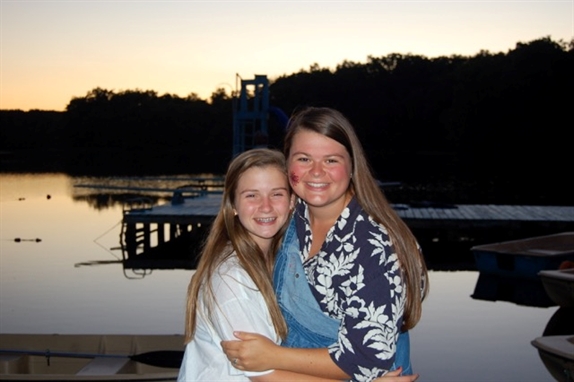
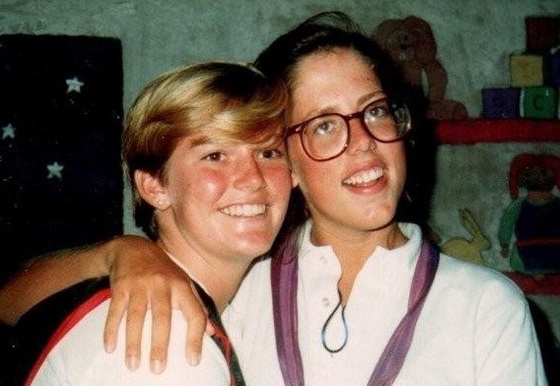
My name is Tiny McPhillips.   That’s me with my camp friend of old, Holly, at one of camp’s Service Weekend events.  (I’m the “huggy” one on the right!)

When I was 8 years old my mother shipped me off to Nakanawa for 8 weeks! I had been begging to go since I was 4! You see, my mother and all of my sisters had been Nakanawa campers, so, naturally, I thought being a “Nakanawa Girl” was the greatest thing in the world! That was back in 1965, and I will be approaching my 37th summer at camp. You may wonder what kept me coming back all these years, and all I can say is that Nakanawa has become my home in many ways. Even with a husband and 4 children, I have continually felt the “pull” of the “Spirit of Nakanawa” every summer!

Now that my children are grown, and I have grandchildren of my own, I am blessed to continue to enjoy the presence of children in my life. During the year, as an assistant teacher, and in the summer, with the Junior campers. These days, with our “plugged-in” lifestyles of electronics and cell phones, Ipods, computers, etc.,it is very rewarding to witness the “unplugging” of the girls as they get settled in at Nakanawa. They are free to be little girls again- to be silly and play and enjoy nature and friendships that they will cherish for a lifetime, as I have.

As far as advice goes-people that know me will testify that I am “full of it” where camp is concerned! So here goes-

CABIN LIFE

Do you want a happy, congenial, caring, and thoughtful cabin? Do you want to love being in your cabin and hanging out with your bunkies?

Well, let me share the wisdom of one of my mentors, Casey Fisher, from my 1st year as a cabin counselor. She told us that our first week needed to be spent earning the girls’ respect and obedience. Make sure they know who is in charge at cabin clean-up time, rest hour, and bedtime. Once you establish a consistent routine, THEN you can show them your “softer” side! I promise you, this is the best way to manage your bunkies-I guarantee this approach will work and free you to have a fabulous summer full of magical moments with your bunkies, instead of maddening moments arguing about what is expected of them!!

Another trick to cabin cleanliness is to straighten up at night before they go to bed. This is a great way to keep up with everything and not be so overwhelmed every morning. Who wants to wake up to a mess every day? Then after lunch, right before rest hour, have another short straightening up time. Cleaning in small intervals helps!!!

Keep in mind though, that all of this takes TIME-time spent IN THE CABIN…not in the Counselor’s Bunk (CB). The old saying, “you only get out of something what you put into it” applies especially to being a cabin counselor.

These little girls will love you immediately-give them your time and attention and you will make lasting relationships. Also, please know that the non-cabin counselors are there for anything you need-call on us! We are (or try to be) a wealth of information, patience, and experience!

Another point to bring up is our unity as a staff concerning cabin life. The campers need to know that we are all dedicated to giving them the best summer of their lives. Their parents are paying mega bucks to send them to camp-it is our job and our responsibility to make sure that their daughter is given enough attention, is well cared for, and is happy. I overheard a group of parents commenting about the condition of the cabin when they visited Nakanawa. One said the cabin looked like a bomb had gone off!!! One said that her daughter had lost many articles of clothing and no wonder when she saw how chaotic and messy the cabin was! It left these families with a bad impression of camp, and of the counselor. Moms and dads really want their daughters to learn cleanliness and personal responsibility at camp, and the condition of the cabin is a true indicator of how well their counselor has done in this area!

Your success as a counselor corresponds totally with the happiness of your bunkies. If your campers are well cared for and attended to, you will have done the job you have been hired to do!!

This is an awesome responsibility! I can’t wait to meet each of you, and congratulations on landing the best summer job ever! Please feel free to ask for my help anytime!

Sincerely,

Tiny

A Little Bit of Camp History

A Little Bit of Camp History

Every so often, a grandmother comes up to us and says the most amazing thing:  “Camp is just the same as when I was a young girl.  It hasn’t changed a bit.”  In this hustle bustle world, that isexactly the phrase that we cherish the most.  The values, the spirit, the emotion of camp linger and continue through the years.

We thought it would be nice, in this 90th decade of Nakanawa, to give you a little snippet of Nakanawa and its traditions.  Most of this is taken from the book, Nakanawa, The First Fifty Years by Margaret Hawkins Matens.  (You may purchase this item at camp.  The campers love to hear the stories of old, directly from this book.)

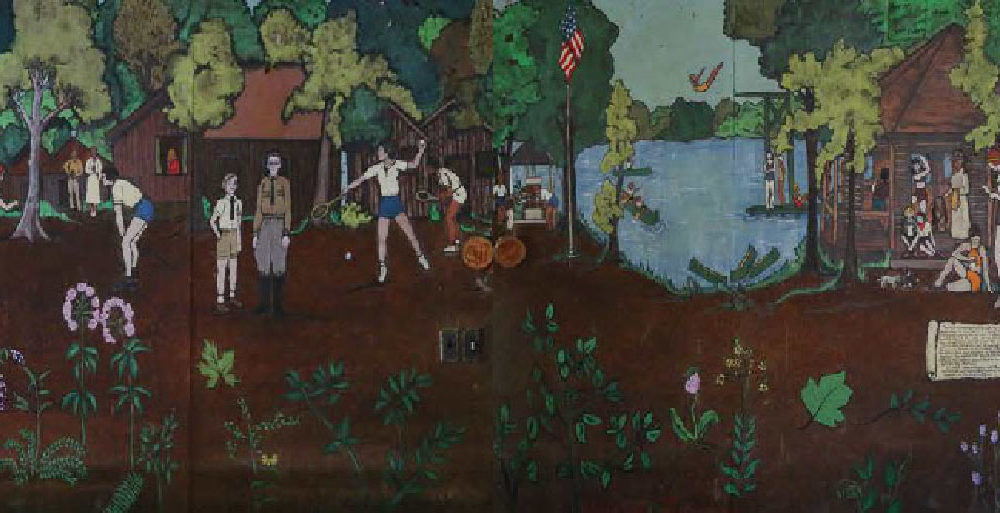
In the 1922 catalog, Colonel Rice wrote of “making the interesting discovery that Nakanawa is located on the site of an old Indian village.”  The Cumberland Plateau area was dotted with sawmills and lumbering camps in the late 1800’s.

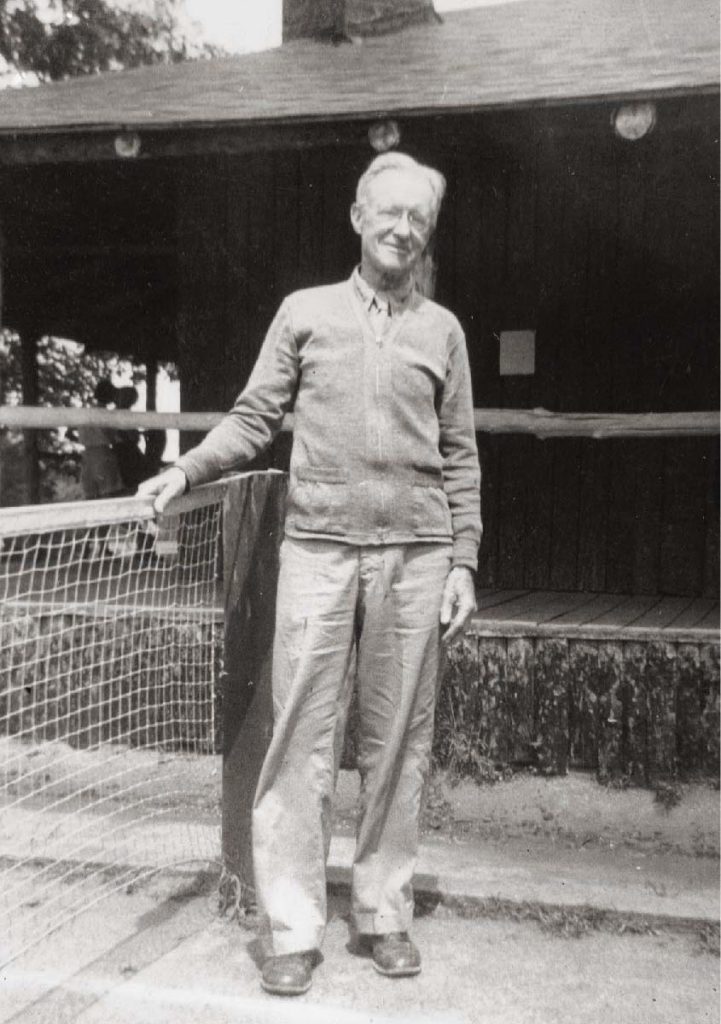
Colonel Rice envisioned Nakanawa as a harmonious Camelot. “Cliques, factions, social, sectional and religious distinctions will not be allowed to mar the beautiful harmony.  Rich and poor, North and South, Protestant, Catholic and Jew — all must meet in common fellowship.  There were 28 “councilors” on staff the first year of Nakanawa, and as required, each was a college graduate.  As the Colonel’s daughter, Annie Hays wrote:  “his love for sports and his feeling that the young girls of that day did not really have the experiences in sports that would promote the health and pleasure, I think was dominant in his plan for Nakanawa.”  Camp Nakanawa “opened its gates” July 1, 1920.

Colonel Rice, with his love of history and classics, chose the legendary women’s tribes Amazons and Valkyries as the names for the campers’ teams.  He created many of their spheres of competition — land sports and water sports — and an elaborate system of distinctions.  Despite this emphasis on distinctions, the spirit of “friendly rivalry” between Amazons and Valkyries was initiated from the first days of camp.  Learn more about Colonel Rice.

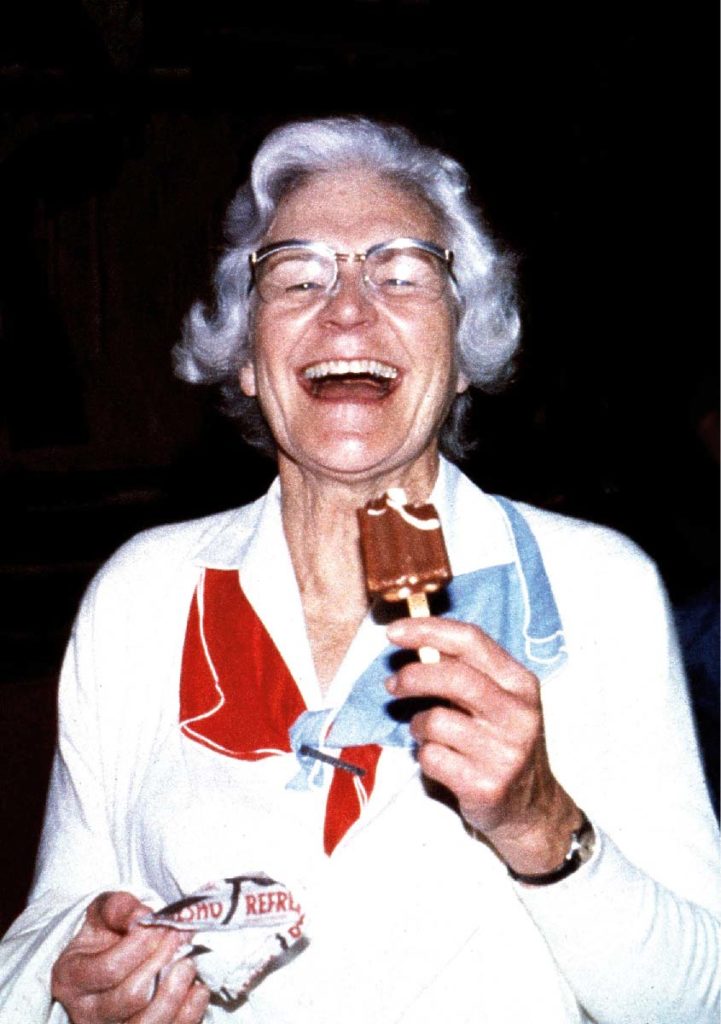
In 1926, Elisabeth Mitchell spent her first summer at camp.  She was a tall, athletic 14-year-old who immediately fell in love with Nakanawa.  In 1948, Mitch became owner and director of Nakanawa.  The three people who were to contribute the most to Mitch’s success with Nakanawa were already working with her during that first year.  The first was her father, “Pop” Mitchell.  His primary focus was on modernizing the physical plant.  The second was Helen Gates “Scooter” Carson, who helped as business manager of camp.  And the third important person in this supporting cast was Carson Tays, who filled the role of caretaker.  Carson had earned the reputation of the ultimate fix-it man during his working days in the coal mines.

Mitch has many legacies from her time at Nakanawa.  She emphasized the place of Intermediates at camp, making them feel that they were a special, select group — not always the underlings of camp.  The summer of 1955 heralded a number of innovations that are still dear to Nakanawa. One was the inaugural war canoe race. Another, the “mama letters” which were written five times a summer.  Two songs made their debut that summer: “Silver Letter Girl” and the Amazon Captain Song.  (FYI..The Amazon Captain Song was first sung to the 1955 Amazon captain, Casey Colwick Fisher!)  It was also the first year that the Amazon Serenade was a surprise to the captain.  Another tradition started in 1955 was the design and creation of the Amazon Warrior, a wire frame depiction which was wrapped and lit before special rock meetings. Learn more about Mitch.

Mitch’s nieces came to Nakanawa, with Janet arriving in 1954 and Ann arriving as a first year camper in Junior in 1962.  One of Ann’s early memories of Junior camp is being sung to sleep each night by her counselor, Chloe.  Fast forward to the year 1980, when at the conclusion of Trophy Night, Mitch made an announcement which leads us to today.  She announced that she was retiring as camp director and turning the camp over to her niece Ann Mitchell Perron and her husband Pepe Perron.

In March of 1981, with Mitch living nearby in Pleasant Hill, Ann and Pepe moved into the Big House at camp and began their tenure as directors of Nakanawa.  So many physical improvements have occurred while Ann and Pepe have been at the helm.  The programs and activities have grown and developed as young girls’ athleticism has developed. We now have exciting new activities like the climbing wall, the zip line and giant swing, golf, nature, table tennis, and soft ball.  The facilities are maintained with impeccable care.
Learn more about Ann and Pepe.

The day lilies, the grounds, the flower beds, the completed trail around the lake are the beautiful reminders of the legacy passed from Colonel Rice to Mitch to Ann and Pepe.  Nakanawa keeps changing without changing.  And as Nakanawa approaches its 100th year, it continues to be a presence in the lives of campers and counselors alike.  Learn more about Nakanawa traditions.

Pepe says Hello!

Pepe says Hello!

Let me tell you a bit about my friend, Pepe…..
by Shelly Duer Landau

As you probably know by know, Ann and Pepe are directors of Camp Nakanawa and have been for the past 39 years. We all understand how Ann found her way to Nakanawa…… First of all she’s of the female persuasion and secondly, she is Mitch’s niece. But Pepe found his way to Nakanawa via his “bride,” Ann.

Ann and Pepe were 29 years old when they became Nakanawa’s third directors. Pepe had already had a successful career in the poultry industry, working closely with his father in their family business in Georgia. When the call came to run a camp for girls, Pepe said he felt just that….. a calling.

And I can see that same “calling” today. As counselors, we are so busy teaching and taking care of our bunkies, that many times we do not see all of the behind-the-scenes work that Pepe does. I have seen a typical day in the life of Pepe Perron, and it is a long, full, busy day, for sure.

Pepe is the first to rise at camp, visiting the two camp dining halls, making sure all is set to go for the day, meeting the IWC truck, unloading the truck, all before our wake-up bell rings. He is usually at one of the camp flag raisings. What he loves most is to interact with the campers. How many times have I seen Pepe talking with a young junior camper before breakfast? They will be sitting together on the bleachers. Pepe will be asking the young camper how things are going. The little camper will be talking Pepe’s ear off about her favorite activity.

And speaking of activities, you will see both Ann and Pepe pop in to various classes. It may look random, but rest assured, they are checking in on a camper who may be homesick, who has some issues going on in her home life, or just may want to check in or a camper in order to give some feedback to a concerned parent.

Pepe makes his day look easy…..but it’s not. He is responsible for the entire physical plant at Nakanawa. That’s over 100 structures, with grounds larger than many state parks. Got a wasp nest? Call Pepe. An issue with any of the facilities? Call Pepe. An injured camper? Yes, that’s Ann and Pepe, too.

One of Pepe’s best roles is the leader of at Council Ring. Once a week, we gather by the council fire in the woods to celebrate the week’s activities and accomplishments. Pepe presides over the council, smiling at the campers, cheering on the challenges and congratulating all who receive their posture ribbons. After every council ring, Pepe will smile and say…..”It’s been a really good week.”

So whenever you see Pepe out and about camp, walk over and say hi. He loves to talk with all of us (campers and counselors) about our day, our activities, and (of course) our love of camp.

See you soon!
Shelly

Ann says “Hi!”

Ann says "Hi!"

Hi, Everyone!
 
I’m Ann Mitchell Perron.  That’s me on the left with my sister Janet.  As most of you know, Pepe and I are the camp directors and live at camp year ’round in the Big House in Senior Camp.  I wanted to tell you about the time that I returned to camp during my summer off as a school teacher.
 
I returned to Nakanawa after an SOS was sent out from my sister to fill a vacancy on the staff mid-season. Being an Elementary School Art Teacher for grades 4-6 gave me summers of freedom to do whatever I wanted to do, as long as my husband agreed!
 
I came, got involved with the campers, staff, horses and riding, and returned for many summers. It was very different returning to camp after being in the “real world” for several years. As a teacher in a public school, you can really appreciate the true purpose of a camp setting and the benefits to be gained by everyone that is fortunate enough to live in such a setting if only for a few weeks.
 
There is a feeling of community at camp. Everyone is eager to help others, become involved, give of themselves, share knowledge, and freely give hugs, physically and emotionally. You seem to have more time to watch a snake move along through the grass and not be frightened; listen to the music of the birds and enjoy the fresh, cool air of early morning; appreciate the squirrels and chipmunks as they scamper and play; notice all the flowers and beauty that surrounds you; enjoy the laughter and singing of campers all around you; and feel the presence of God.
 
There are women of all ages, sizes, shapes, and backgrounds at camp. There is much to be learned by each and every one of them. The mature staff members are the mentors and role models for the younger counselors. The younger counselors are the mentors and role models for the campers. The campers provide the energy and enthusiasm to keep camp vibrant and alive! Everyone works together to provide a safe, healthy, happy environment.
 
Pepe and I are looking forward to a wonderful summer.
 
See you soon!
Ann

Meet your Head Counselors

Meet your Head Counselors

Cindy Alexander DuBose (TR’86) will be returning for her sixth summer as the Head Counselor for Junior Camp. This year she will be joining us for both the TWO WEEK and the FOUR WEEK SESSION!   Cindy has been a counselor and a camper at Camp Nakanawa since the 1980′s. Cindy coached tennis for 15 years and is the Academic Dean for Social Studies at Johnson High School in San Antonio, Texas.  Cindy’s fantastic experiences and memories from camp have inspired her to bring fun, friendship and love of camping to the young ladies of Nakanawa.  She is organized, well-prepared and always ready to listen to campers and counselors. Cindy is likely to be in the middle of fun, whether leading a hike or a late-night prank (following camp rules of course). Cindy and her husband David live in San Antonio, Texas with their handsome dog, “Buster.”

Choose your Committees

Choose your Committees

Please read through the following list of committees and email your Head Counselor with your top three choices.  If you would be interested in being the “Head” of a committee, please indicate in the email.

Two Week & Four Week Junior Camp
Email Cindy DuBose at cdubos@neisd.net with your committee choices.

Two Week & Four Week Intermediate and Senior Camp.
Email Karen Rathgeber Hale at karen.campnak@gmail.com with your committee choices.


Counselor Committees:

Evening Entertainment – Plan all camp nightly activities such as skits, talent show, games, etc.

Sunday Afternoon Event – This group plans a fun, active, “station-to-station” type afternoon event, lasting about 3 hours.  It takes a lot of planning, attention to detail, and a spirit of fun.

Newsletter – Usually takes time (daily) to write down the day’s activities. Then it takes at least one hour Friday, Saturday and Sunday to write and complete.  You will be in a group that takes turn writing the weekly camp newsletter.  Karen will take your newsletter and upload to “Emma” our email engine. So no one is really in charge… We just take turns, week-by-week, doing a newsletter.

Photography – Big Job, but manageable with your schedule. Pictures on the Nakanawa web site are the life-line for parents.  On this committee, you will share in the responsibility of taking pictures at various events (classes, meets, evening entertainment, free day events) so that they can be uploaded to the web site.

Council Ring Coordinator  – (Intermediate and Senior 2 and 4 week sessions only).  You would be in charge of the entire Council Ring evening, making certain all individual jobs and recognitions are complete.

Council Ring Challenges – This group selects and lead the challenges once a week at Council Ring.  Challenges are little competitions among the council ring “tribes” (or campers.)

Council Ring Legend – The legend is a story (usually told from a Native American view) which is acted out by campers.  Your committee helps choose or write the legend, direct the story (campers), assist them with set up and performance once a week at Council Ring.

Fire building – You will build at least one fire a week (at Council Ring), but there are other (sometimes random) times you will be called upon to build fires: overnights, vespers, etc.

Sort and Hand Out Mail – BIG JOB! Just like it sounds…. you sort and hand out the mail.  If you are a 4 Week Senior counselor, do not choose this.  It’s just for Junior camp counselors and the 2 Week Intermediate counselors.

Outgoing Mail and Laundry – No you’re not doing the laundry, but rather handing out the laundry slips to cabins, making sure they put their bags on the proper pick up areas, and then organizing the laundry packages when they return from the laundry service.

Flag Raising and Lowering – You work with a different cabin each day, teaching and helping them with flag raising and lowering.

Commissary – Each day, the commissary is open after rest hour (and other times perhaps).  You sell stamps or items, or hand out apples or snacks.

Milk Break / Apple Break – Every day you help serve a morning snack. Yum!

Free Day – One day a week, we do something other than have classes.  But it’s not “free.”  This committee is responsible for organizing and implementing the activities of the day, from hikes to friendship bracelets to special activities.

Overnights – This committee organizes the overnights, making certain every detail is planned and implemented from food, water, devotion plans, fire building, etc. You also help generate excitement and enthusiasm among the other counselors and campers.

Sr. Camp Trips Coordinator – Senior 4 Week Session only. This is a BIG JOB.  You plan and implement the 5 different trips taken by Intermediate and Senior campers. Bring your best patience and organizational skills to this task.

Oversee Patrol and CB Clean Up  Every night, from lights-out until midnight, two counselors serve on patrol.  They make sure that the cabin area is quiet, and they are the go-to counselors in case campers have a problem while their counselors are out of the cabin, hanging out in the CB.  These same two counselors will also be responsible for cleaning/tidying the CB that same day.  Sort of a two-for-one deal.  The Patrol and CB Clean Up Committee will make up the schedule, make sure the tasks are complete, and fill in if need be.

Counselor  Church  This committee plans the one counselor church that takes place during the 4 week camp session (Sunday #3).  (So do not sign up for this if you are only doing the 2-Week session).

Counselor Vespers – (Not for 4 Week Senior session)  Vespers quiet reflective time spent down by the lake, Sunday evenings around dusk.  This committee will organize the vesper service.  It’s always a special Nakanawa tradition.

Inspection – BIG JOB!   This committee will inspect the cabins daily, evaluating each cabin based upon tidiness and cleanliness.  You will have allocated time to complete this task.

Lost and Found – This committee not only helps gather all lost and found items, but organizes it in the lost and found bin, then makes sure it gets back to its rightful owner as soon as possible.  It is best to do this on-going. The committee is also responsible for helping out with this task at the end of both camp sessions.

Posture  Yes… you would be “the posture bird!” Since 1920, Nakanawa girls have been proud of their good posture.  And  we recognize those campers once a week if they are sitting ups straight and tall.  It takes a committee to catch them sitting up tall.  If you teach a class such as glee club, arts & crafts, even canoeing, you may  be able to spot them in your class time.  Otherwise, you would take notes of campers’ names who have good posture, and present their names at Council Ring each week.

Event set-up
This is one of those behind-the-scenes jobs that is so important, happening in stealth, unnoticed way.  This committee is responsible for setting up the Wigwam or Council house for events such as team drawings, church, even some Evening Entertainments if called upon.

4th of July Event – Do not sign up for this if you are in the 2 Week Session only.  The afternoon of the 4th of July is a fun, action-packed afternoon filled with games and activities.  You and your committee will plan the events, organize and lead them.  (Oh, as well as clean up any messes, too.)

Circus – BIG JOB!  Though this is a Senior 4 Week committee.  The planning actually begins during the Intermediate 2 Week session. So sign up if you want a big planning (and fun) job, and will be on the Int/Sr side of the  lake for both sessions.  It’s a 3-ring-circus!

Slideshow Coordinator – Sr 4 Week – Member of TR’19.  If you are a member of TR19, and you are in the 4 Week Senior session, you could sign up to be a part of this committee.  It is a BIG JOB, and one that takes many weeks to pull together.

Nakanawa’s No Package Policy

Nakanawa's No Package Policy

Mail Call is one of the highlights of the day; campers enjoy receiving mail from their family and friends. Over the past few years we have seen an overwhelming increase in the amount of packages. Unfortunately, this has created a messy cabin environment, competition amongst campers to write home for more packages and interferes with the true purpose of camp. Campers who don’t get packages feel left out. In addition, the influx of packages and their waste run contrary to our Environmental Impact Statement.

Only flat letters (No. 10 envelopes and smaller) may be sent to campers. Packages to campers will be returned to sender unopened. This policy includes books, magazines, and oversized envelopes. Please spread the word to family and friends so that you do not incur unnecessary shipping costs. Please do not send camper packages to counselors, as they are not permitted to receive these packages from camp families.

If your daughter is having her birthday at camp, please mark package “hold for [camper’s name] birthday” and drop off at the office on the Opening Day of camp. Remember, do not include food or candy.

A few more thoughts on packages:

  • Please do not bring food, candy, or gum to camp. Food and candy (including gum) are distinct health hazards by attracting mice and other rodents. The Nakanawa teams have as one of their requirements “no food or drink except that given by camp.”
  • All envelopes that are thick and/or larger than letter size will need to be opened for inspection because of our camp policy. Food/Candy will not be stored and is discarded.
  • We understand that campers like to receive (and parents like to send) photos while their campers are away from home. Over the past few summers, more and more parents have been sending photos via the Postagram App. It is free to download, fast and user-friendly. Pictures arrive in a postcard sized format, which we gladly accept and deliver!
  • A word about “bunkies gifts:”  This is a phenomena that has exploded over the years, as well.  This is not something that is necessary. So if you feel bunkie gifts are needed, please anticipate this ahead of camp.  (We feel it is an unnecessary expense.)


  • Again, if your daughter should need to receive a necessary item (i.e. contact lenses, glasses, medication)  please call the office so we know to expect the delivery and get it to her.

Thank you for your understanding. We know that camp is a gift in itself.

Ann and Pepe Perron

Directors, Camp Nakanawa

Nakanawa’s Anti-Bullying Policy

Nakanawa's Anti-Bullying Policy

Bullying is when one or more people exclude, tease, taunt, gossip, hit, kick or put down another person with the intent to hurt another.  Bullying happens when a person or group of people want to have power over another and use their power to get their way, at the expense of someone else.  Bullying can also happen through cyberspace: through the use of e-mails, text messages, instant messaging, and other less direct methods.  This type of bullying can also lead to persons being hurt during or after the camp seasons and be especially hurtful when persons are targeted with meanness and exclusion.

At Camp Nakanawa, bullying is inexcusable, and we have a firm policy against all types of bullying.  Our Camp philosophy, which dates back to its founding in 1920, is based upon the ideals of friendship, love, honor and truth.  At Nakanawa, we strive to ensure that all young women gain self-confidence, make new friends, and leave with cherished memories and friendships that last a lifetime.  Bullying, in all its forms, is not tolerated, and stands counter to Nakanawa’s fundamental goals.

At Nakanawa, we address all incidents of bullying seriously and train our counselor staff to alert us of any problems related to bullying.  Every person has the right to expect to have the best possible experience at camp, and by working together to identify and manage bullying, we can help ensure that all campers and staff have a great summer at Camp Nakanawa.

Fondly,

Ann & Pepe Perron
Directors

**Our camp has a published anti-bullying policy.  Parents, campers, staff and volunteers are aware of it.  Together we will prevent cruelty of any camper.  Our camp is no place for a bully.  A bully sent home will stay home:  No return to camp this summer and no refund of tuition.

Mother Daughter Weekend 2018

MOTHER DAUGHTER WEEKEND SEPTEMBER 14-16, 2018

Click Here to register for Mother Daughter Weekend 2018

Camp Nakanawa invites you to attend our 10th annual Mother Daughter Weekend!  This event is designed to introduce little girls to camp by letting them spend a wonderful weekend at Camp Nakanawa, accompanied by their mother, grandmother, or other adult friend.  The future campers (perfect age 5-11) and their chaperones will sleep in a cabin, tour the camp, canoe on the lake, ride horses, zipline, eat s’mores, go on a hayride, learn camp songs, and meet many current campers and counselors.  This weekend is open to everyone, not just Nakanawa alumnae!  Space is limited, so early.  Please contact us if you have any questions at 931/277-3711 or campnak@campnakanawa.com .

 
When:  Friday, Sept. 14th -16th 2018
 * Friday arrival between 3:00 – 5:00 pm
 * Sunday departure around 11:00 am
Where:  Senior Camp Nakanawa
 
Who:  Nakanawa campers, counselors, and parents (past or present), along with any female friends or relatives who are interested in camp.
The focus will be on prospective campers (suggested ages 5 – 11).
Purposes:

* Introduce your daughter, granddaughter or other favorite little girl to Nakanawa and its traditions, so that when she is of camp age, she’s ready to go!
* Introduce adult friends or relatives to camp.
* Get a behind-the-scenes look at camp for prospective campers and moms.

Activities:
* Sample several of the most popular camp classes, including horseback riding, nature (meet and learn about the wild critters and snakes!), arts & crafts, and climbing wall/zip line.
* Experience camp life by sleeping in a cabin, eating in the Dining Hall, and waking up to the bell.
* Learn about the Amazon and Valkyrie teams, camp traditions and songs.
* Enjoy swimming and canoeing on the lake, a hayride, Council Ring, a lakefront cookout with a bonfire and s’mores, and Evening Entertainment.
* Meet Directors Ann and Pepe Perron, as well as current campers and counselors.
* To see a sample schedule, click here.

Video: Nakanawa in 4 Minutes

 
Your Responsibility:
 
Nakanawa staff will be present all weekend; however, the adults who bring girls are expected to stay with them at all times, supervising and giving permission for various activities, helping them shower in Egypt (our bathhouse), putting them to bed, etc. Camp is smoke-free, and this will be an alcohol-free weekend.
Registration:  Open through September 10th.
 
Cost:  Adults $175; Children $125 (fees apply to this amount making the total price $187 for adults and $134 for children) This price includes all meals, lodging, and activities.
 
Transportation:  Camp is located near Crossville, TN.  The Nashville airport is approximately two hours away.  The Knoxville airport is approximately 1.25 hours away.
Staff:  Experienced Nakanawa counselors will oversee the weekend’s activities.  Any former counselors interested in volunteering, please email Karen Parrish at karenbarlowparrish@campnakanawa.com.


Cancellation Policy:  Cancellation notifications must be received at least two weeks before the event to receive a full refund, no later than September 9th.

Questions or Special Needs Contact Karen Parrish at  karenbarlowparrish@campnakanawa.com
 
Beneath the pine trees, there is a soft breeze… but the sound that is the sweetest .. our NAKANAWA is neatest … oh, Golly Gee … it WILL be great to be … here at Nakanawa!
 

Meet Annette Hall

Meet Annette Hall

Annette Hall has worked at camp for 40 years and is officially the Financial Specialist and Advisor to Camp Nakanawa!  Unofficially, there is not a job title thorough enough to describe all that she brings to camp.  Annette has a true connection with nature.  She is an avid gardener, photographer, fisherwoman and lover of animals.  On any given day, you will find her deep into the butterfly garden or around camp planting flowers, watering flowers or rescuing bunnies and birds of all shapes and sizes.

Annette is one of seven siblings who grew up in Jamestown, Tennessee which is not far from Mayland.   Annette’s husband, Mark Hall, did not live far from her family and it wasn’t long before the two caught each other’s eyes and ultimately married. They have been married for 40 years!  Mark is the minister at their church and he and Annette have devoted their lives to ministering to this community in so many ways.  Annette describes herself as a “behind the scenes” person when it comes to church but she also loves to sing and it is rumored that she is quite talented in this area!

Annette and Mark have two children — their late son, Josh, and their daughter Whitney.  The ultimate passion and piece of Annette’s heart is  her granddaughter, Lauren!  Annette adores being a grandmother to this precious child.  It goes without saying that Lauren will want for nothing with Annette around.  They are the best of buddies and get to spend a great amount of time together!

“One of the reasons that I have loved working at Nakanawa is because I sit at this desk and the world comes to me.  I have met so many people and experienced so many different things without even leaving my small community, ” Annette explained.  She had a great admiration for her grandmother who was one of 13 children and lived through the depression.  Annette said that her grandmother was a great influence in her life because she was warm and loving.  She loved life and lived it to the very fullest.

Annette has surely carried on that legacy and claims that her motto for living a good life is “Faith, Family, Friends!”  Annette embodies the Spirit of Nakanawa in every way and camp has benefited far beyond measure from all that she has given.